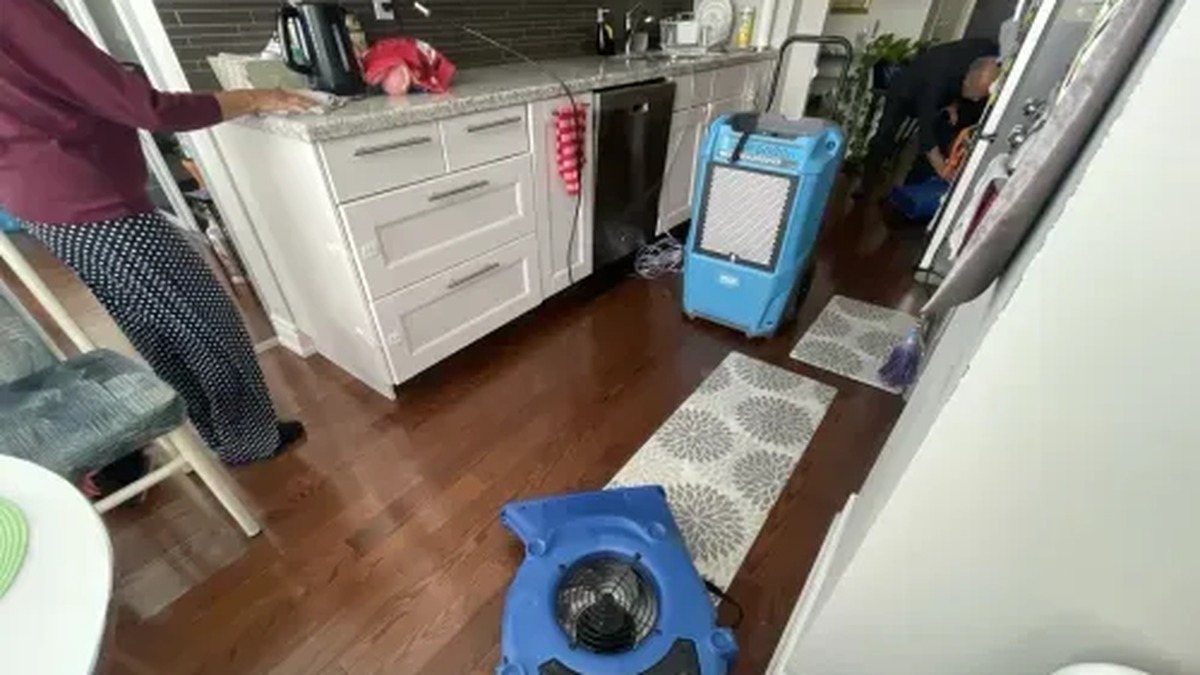
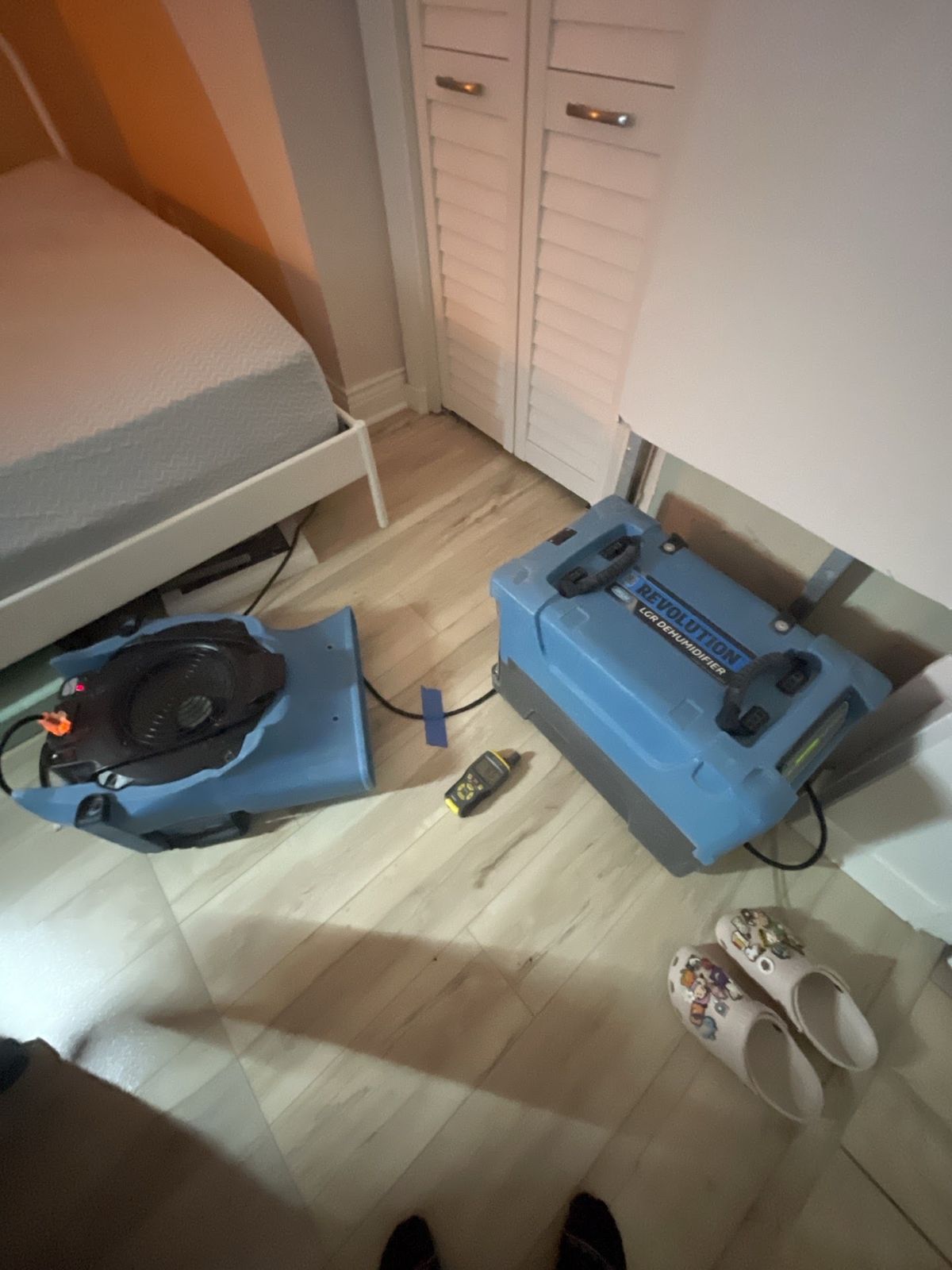
The short answer: most professional structural drying takes several days, often around three to five. The real answer depends on what got wet, how long it stayed wet and what the conditions are inside the building. In South Florida, high outdoor humidity is part of the equation too.
What affects drying time
- Materials. Drywall and carpet dry faster than concrete, hardwood, plaster or multi-layer cabinets.
- How long the water sat. Water that reached wall cavities and subfloors takes longer than a surface spill caught early.
- Water category. Contaminated water means porous materials are removed rather than dried, which changes the timeline.
- Equipment and airflow. The right number and placement of air movers and dehumidifiers matters more than "more fans".
- Indoor conditions. Closed-up rooms with the AC off dry slowly; controlled temperature and humidity speed it up.
Why "it feels dry" isn't good enough
Surfaces dry first. The inside of walls, the bottom plate, the back of cabinets and the slab can stay wet for days after the surface feels dry. Closing up or installing new flooring too early traps that moisture and invites mold. Drying is finished when moisture readings reach a normal level for each material, compared with unaffected areas of the same building.
What daily monitoring looks like
- Readings at marked points in every affected room, every day
- Equipment adjusted or removed as areas reach their dry standard
- A written drying log your adjuster can review
Can I dry it myself?
For small, clean-water spills caught quickly, renting a dehumidifier and air movers can work. ZM MADE Restoration rental packages start at $449 for 3 days, including free delivery, setup and pickup, and you can upgrade to full service at any time if readings show the water went further.
Questions about your drying timeline? Call (561) 980-7688.