Wet drywall does not automatically mean new drywall. If the water was clean, drying starts within a day or two, and the board is still firm with its seams intact, it can often be dried in place. That saves demolition, patching and repainting. If the water was contaminated, the board is swollen or soft, or mold has started, it has to come out. Here is how to tell which side of that line you are on.
The short answer
EPA cleanup guidance for clean water says drywall “may be dried in place if there is no obvious swelling and the seams are intact”. If not, remove and replace it (EPA, Table 1). The industry standard for water damage restoration, IICRC S500, goes further for contaminated water: gypsum wallboard is removed and replaced after a Category 3 water intrusion (R&R Magazine on S500).
Usually dried in place
- Clean water: a supply line, a water heater, an AC condensate overflow or rain through a window.
- Drying starts within 24 to 48 hours. That is the same window the EPA gives for preventing mold.
- The board is firm, flat and not crumbling, and the tape seams have not lifted.
- No visible mold and no musty smell from the wall.
- The finish is hard to match, such as textured walls, wallpaper or tile backsplashes. Saving the board saves the finish.
Usually cut out
- Contaminated water: toilet overflow, sewer backup, or outside floodwater and storm surge. See Category 1, 2 and 3 water.
- Physical damage: swelling, softness, sagging ceiling board, or paper facing that peels or blisters.
- Wet insulation behind it. EPA guidance is to discard and replace wet fiberglass or cellulose insulation.
- Mold growth on the board or inside the cavity.
- Time: the wall stayed wet for days before anyone noticed, which is common with slow leaks behind cabinets.
When board does come out, it is cut in a straight line above the highest wet reading, not just above the visible stain. Water wicks up drywall further than it shows.
How drying in place actually works
- Moisture mapping. Meters and thermal imaging show exactly how far the water spread inside the wall, which is often well beyond the visible damage.
- Opening the cavity without tearing it out. Baseboards come off. Where needed, small holes are drilled low on the wall, behind where the baseboard sits, so dry air can move through the cavity.
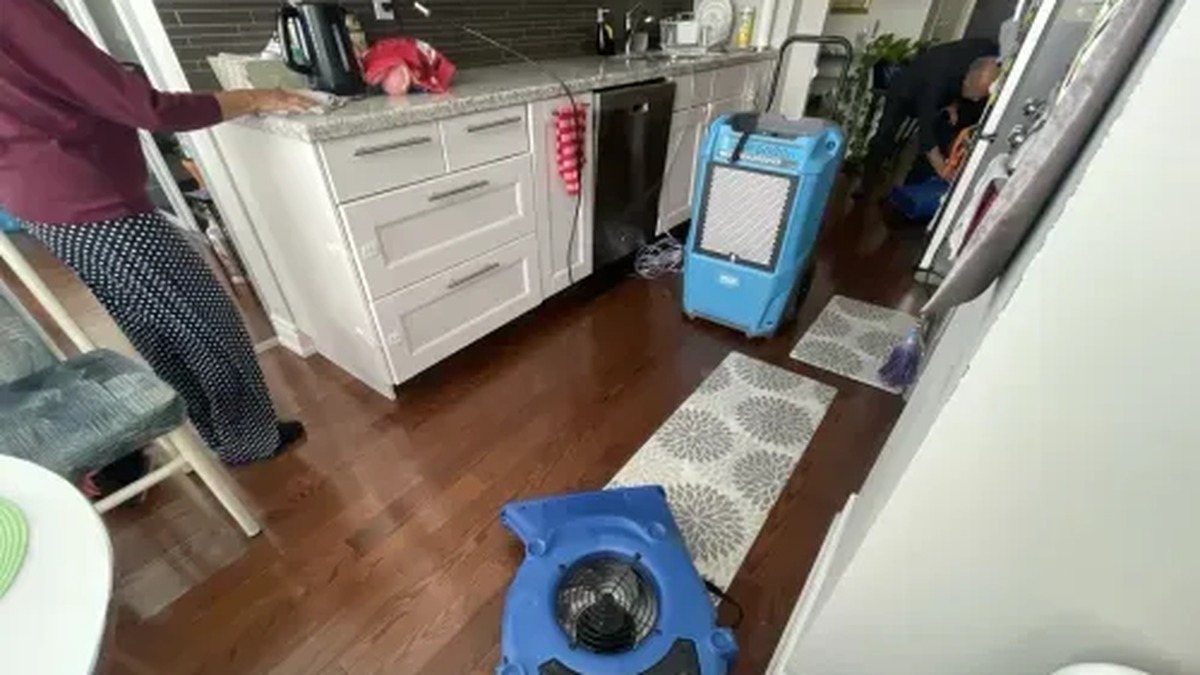
- Dehumidifiers and air movers. They are sized to the wet area. In South Florida’s humidity, the dehumidifier does most of the work.
- Daily readings at the same marked points, recorded with photos.
- Done when it matches dry. The wall is dry when its readings match unaffected drywall of the same type in the same building. Touch, looks and a fixed number of days don’t count.
Things that change the answer
- Cabinets and built-ins in front of the wet wall. Drying behind them in place can save expensive casework.
- Vinyl wallpaper and other non-breathing finishes. They trap moisture, so they may need to come off for the wall to dry.
- Fire-rated walls, such as the wall between condo units. Any opening or patch has to restore the original fire rating, so plan the repair with that in mind.
- Condos. Water often crosses into the next unit or the one below. Get the association involved early. See who pays in a condo leak.
Why “it feels dry” is not enough
The paper face of drywall dries quickly while the gypsum core and the bottom plate behind it stay wet. Close up a wall too early and you seal moisture in. That is how mold shows up behind fresh paint a few weeks later. Daily readings protect you, and they are the record your insurer will ask for. See drying documentation and drying verification.
What ZM MADE Restoration does
We map the moisture first, then recommend the least destructive option that will actually get the wall dry. We dry in place where the board can be saved and cut out only what has to go. We take readings every day until the wall matches dry. See structural drying, or get a quick price range with the cost calculator.
Wet wall right now? Call (561) 980-7688, 24/7, or request a free on-site estimate.
Frequently Asked Questions
How long does wet drywall take to dry?
Usually several days with professional dehumidifiers and air movers. It can take longer behind cabinets or in very humid weather. Daily readings decide when it is done.
Can I dry drywall myself with fans?
Fans move air but don’t remove moisture from it. In South Florida humidity, fans alone can push damp air deeper into the wall. A small, clean, recent spot may dry with a dehumidifier and good airflow. Confirm with a moisture meter before you patch or paint.
Is drywall that got wet once ruined?
No. Gypsum board that got wet with clean water and dried quickly, without swelling or mold, usually performs normally afterward.