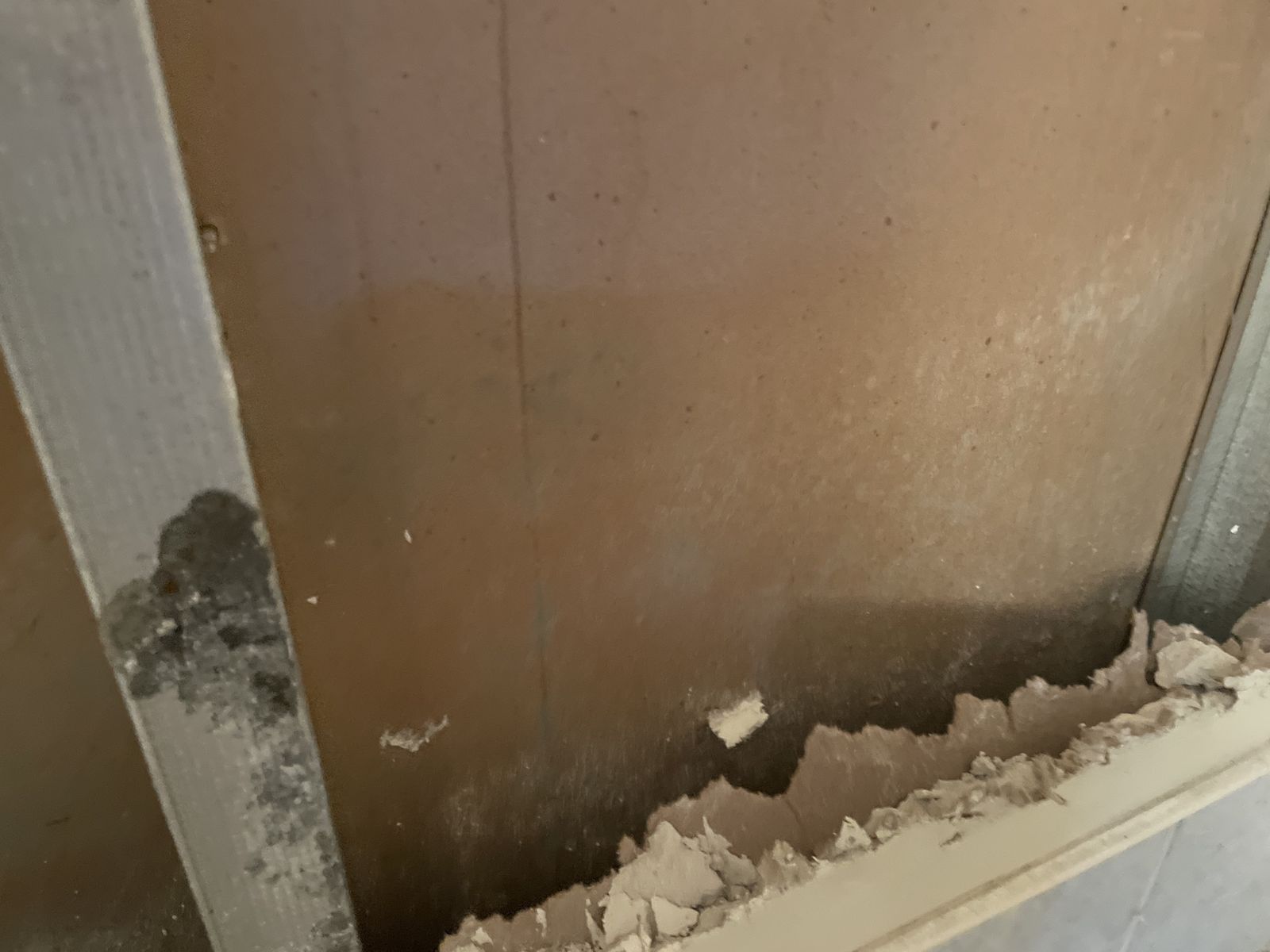
A brown ring or yellow patch on the ceiling means water has already soaked through the drywall from above. The stain is the last thing to appear, not the first. By the time you see it, the insulation or framing above may have been wet for days. The good news: if you find the source and start drying within 24 to 48 hours, the ceiling can often be saved. The EPA gives the same 24 to 48 hour window for keeping mold from growing.
First: is the ceiling safe to stand under?
- Sagging or bulging? Water is pooling on top of the drywall. Keep people and pets out from under it and move furniture and electronics away.
- Light fixture or ceiling fan in the wet area? Switch that circuit off at the breaker before anything else. Do not touch a wet fixture.
- Still dripping? Put a bucket or towels under it and take dated photos of the stain, the drip and the room.
- Brown, smelly water or a bathroom above? Treat it as possibly contaminated. Keep out and call a professional.
Where the water is coming from
In South Florida homes and condos, ceiling stains almost always trace back to one of five sources. The pattern of the stain is the best clue.
- Air conditioner. Stain near the air handler closet, a supply vent or the attic hatch, and it grows on hot days when the AC runs hard. Usual causes are a clogged condensate line, an overflowing drain pan or ducts sweating in the attic. See why AC leaks are so common here.
- Roof or flashing. Stain appears or darkens after heavy rain, often near a wall, a skylight or a roof penetration. See roof leak after a storm.
- Plumbing above. Stain under a bathroom, kitchen or laundry room upstairs. Supply lines, shower pans, toilet wax rings and drain joints are common culprits, and the leak may only run when that fixture is used.
- The condo unit above. Stain on your ceiling with no plumbing or AC of your own above it. Notify the association and the owner above right away, in writing. See who pays when the unit above leaks.
- Condensation. Faint, spotty staining around vents or along cold ducts, with no single drip point. Common when ducts or the attic are poorly insulated.
If the pattern doesn't point clearly to one of these, leak detection with thermal imaging and moisture meters can trace the water to its source without opening the ceiling blindly.
A dry stain is not always a dry ceiling
A stain can look dry on the surface while the insulation and the top of the drywall above it are still wet. Touch and looks are not reliable. A moisture meter reading, compared with dry drywall elsewhere in the same room, tells you whether the ceiling is still wet and how far the water spread.
Can the ceiling be saved?
For clean water caught early, often yes. EPA cleanup guidance says drywall “may be dried in place if there is no obvious swelling and the seams are intact”. It also says wet insulation should be removed and replaced (EPA, Table 1). In practice:
- Usually dried in place: clean water from a supply line or AC, found within a day or two, drywall still firm, seams intact.
- Usually cut out: sagging or soft drywall, crumbling joints, wet insulation that cannot be dried, visible mold, or water from a toilet, sewer line or floodwater (Category 3).
Don’t paint over it yet
Stain-blocking primer hides the mark, not the moisture. Paint only after the source is fixed and moisture readings show the ceiling is back to dry. Otherwise the stain bleeds back through, or mold grows above where no one can see it.
Who to call for what
- Stopping the source: a roofer for the roof, a licensed HVAC contractor for the AC, a plumber for supply and drain lines.
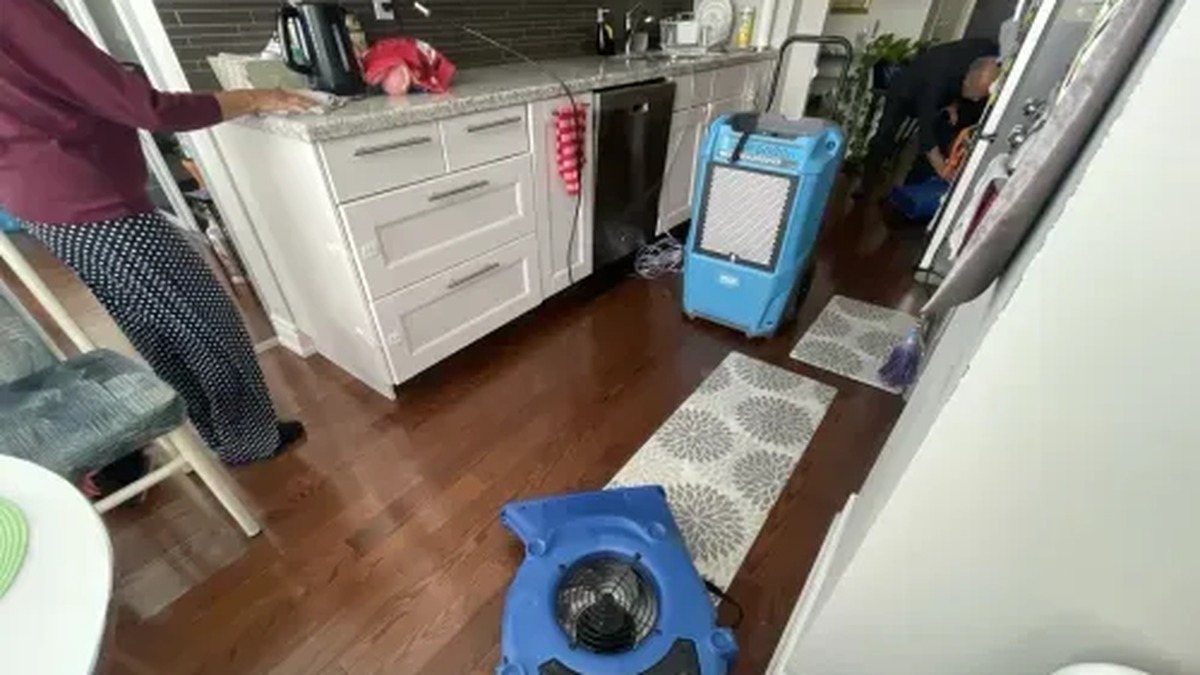
- Finding where the water went and drying it: a water damage restoration company with moisture meters and drying equipment. That is what ZM MADE Restoration does.
- Insurance: photos, moisture readings and a written scope from day one make any claim easier. See how to document water damage in Florida.
What we do on a ceiling leak
We map the wet area with moisture meters and thermal imaging, open only what has to be opened, and set dehumidifiers and air movers. We take readings every day until the ceiling, insulation and framing are dry, with dated photos for your records. If mold has started, we handle licensed mold remediation under Florida license MRSR5858.
Stain spreading or ceiling sagging? Call (561) 980-7688, 24/7, or request a free on-site estimate.
Frequently Asked Questions
Is a small ceiling stain an emergency?
Not always, but it is a deadline. If it is growing, soft or still wet, call the same day. If it is old and dry, have it checked with a moisture meter before you paint, because the area above can still be wet.
How long does a wet ceiling take to dry?
Usually several days with dehumidifiers and air movers. It depends on how much water got in, whether insulation is wet and how humid the house is. Moisture readings, not the calendar, decide when it is done. See how long drying takes.
Will insurance cover a ceiling stain?
It depends on your policy and on the cause, such as a sudden pipe or AC failure versus long-term wear. Only your policy and your insurer can say. We give you the photos, readings and written scope to support the conversation.